As a member of the Trinidad and Tobago Bureau of Standards (TTBS) Information Technology Committee, the Trinidad and Tobago Computer Society (TTCS) ) submitted its recommendation on DIS29500 aka OpenXML on March 6th 2008 as per the deadline set by the TTBS.
Other members of the TTBS IT committee have also made recommendations to the TTBS on whether the TTBS, as a result of being a Participatory Member in ISO/IEC JTC1 SC34 can either approve, disapprove or abstain from voting on DIS29500 to be a ISO standard.
For the first time since the TTCS has submitted comments on various IT related policies in Trinidad and Tobago, we used Google Documents to create and edit the recommendation 1,195 times before the document was complete. This has worked well compared with sending emails of different document versions back and forth, and the TTCS will probably use this facility for future submissions similar to these and other IT related policies.
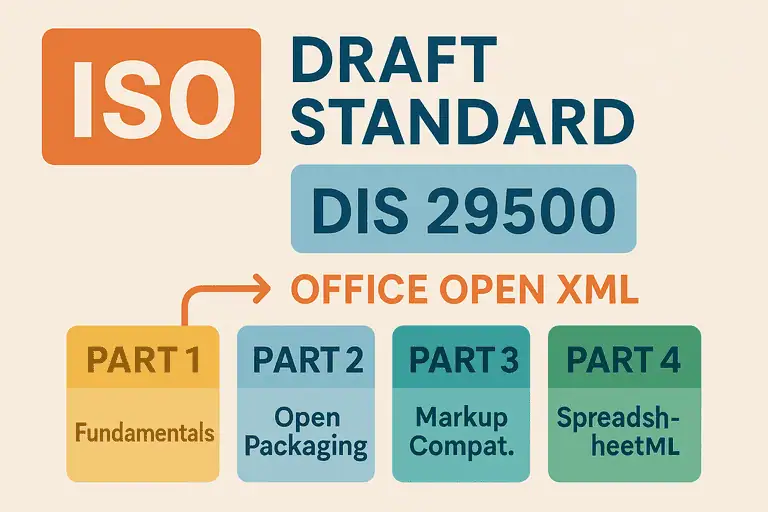
DIS 29500 refers to Draft International Standard #29500 which is currently the subject of the fast-track standardisation process at the ISO/IEC JTC1.
This draft seeks to make the Office Open XML also known as OOXML or OpenXML format (created by Microsoft) an international standard for electronic document formats.
In a September 2007 ballot, ISO/IEC national body members were called upon to vote. The draft version failed to obtain the number of votes required for it to be accepted as a standard.
The Trinidad and Tobago Bureau of Standards (TTBS), which became a P-status voting member before the vote, cast an “abstain” vote.
After the September 2007 vote at ISO, there were over 3,000-3,500 comments from National Bodies ; you can view those on sites like http://www.dis29500.org/
After this BRM, National Bodies which voted in September 2007 (and thus the Trinidad and Tobago Bureau of Standards) will have an opportunity to change their September 2007 vote within 30 days to either approve, disapprove or abstain.
ECMA Press release on the completion of dispositions of National Body comments on DIS29500 (2008-01-14) : “The ISO/IEC DIS 29500 Project Editor, with the help of Ecma TC45, is publishing the Project Editor’s Report of Proposed Dispositions. This completes TC45’s review of the 3,522 National Body comments raised on the DIS 29500 ballot in September, and its preparation of proposed dispositions in support of the Editor.”
Brian Jones: Open XML Formats – Brian Jones is a progam manager of MS Office at Microsoft. His blog ‘s primarily deals with OpenXML and mentions some of the changes being made to DIS29500 that will be submitted to ISO before the BRM. Some of the blog posts :
500+ national body comments posting today (2007-12-21) – post describes some of the changes to DIS29500 due to ECMA’s consideration of ISO comments from Sept 2nd, 2007
YouTube OpenXML channel – videos from Microsoft which has various videos regarding OpenXML including demos and interviews.
TTBS activities in preparation for voting on DIS29500
The Trinidad and Tobago Bureau of Standards (TTBS) has setup a IT committee comprising of organisations/groups outside of the TTBS which will advise/recommend on IT related ballots that the TTBS has to vote on due to its Participatory status. The Trinidad and Tobago Computer Society (TTCS) was invited to join the Trinidad and Tobago Bureau of Standards IT committee to work on ISO/IEC JTC 1 matters in November 2007 :
https://www.ttcs.tt/blog/ttcs-ttbs-isoiec-jtc-1
The TTBS will be having a forum on DIS29500 on February 19th, 2008 to provide a wider source of information about OpenXML and guide TTBS in finalizing a formal position on DIS29500.
At the recent committee meeting on Thursday 31st January, 2008, the idea for a forum hosted by the TTBS was scrapped.
Debate within the committee has focused on :
The criteria can/should be used to evaluate OpenXML and other ISO standards and how to quantify/measure whether such standards have met the criteria.
At the 7th IT committee meeting on Thursday 21st February 2008, the following deadlines were established :
March 6th, 2008 is the final day for submission of comments to TTBS by the IT committee members on the OOXML standard.
The Comments submitted should clearly indicate the final position.
March 13th, 2008 is the date for the next TTBS IT committee meeting to finalize a committee position on this standard.
TTBS will indicate its position by March 20th, 2008.
Proposed criteria to evaluate OpenXML by the TTBS
This list was first circulated on 2008-01-31.
The following is a proposed list of criteria which can be used to evaluate the proposed OOXML Standard to determine if it can be considered an “open standard”.
Open Life-Cycle – A format development process having an open life-cycle means the format is evolved in a fashion that is open to public and where all participants, individuals as well as companies, have a voice in consensus decision-making on the standard’s technical make-up. An open standard should be platform and vendor-neutral. Multiple implementors working on multiple platforms is essential.
Open Availability – An open format is published in its entirety in a specification document which is freely available and easy to comprehend. Open Availability also means that a format is freely available for implementation in software.
Multiple Implementations – An open document format can and will be designed in to many different software applications without practical, technical, legal or other impediments.
From a different perspective it is fair to say that an open format has the characteristics that attract multiple implementations. If one had no other way to tell, the format specification with the greater number of complete implementations likely follows open principles more rigorously and will better deliver information free-flow between applications and platforms.
Interoperability Across Different Systems – Perfect interoperability across different systems means a format can be fully implemented in any application, regardless of the platform or system on which that application operates. Every respective system would be able to access a document’s content and layout parameters to provide perfect document fidelity to the original.While neither ODF or OOXML offers perfect interoperability, we can judge each one’s performance based on its proximity to perfection as well as its potential to reach a high practical level of interoperability for business processes. It is sufficient that an open document format should be easily read, authored and edited from within different system environments and across different applications. Content should be transmitted without loss and presentation layout should be rendered with fidelity by alternative applications operating on different platforms.
Background/related links about ISO/IEC JTC1 SC34
The TTBS became P-status voting member in ISO/IEC JTC1 SC34 around July 2007.
The Trinidad and Tobago Bureau of Standards (TTBS) is a P-status member in SC34 and must therefore consider draft IT standards and vote accordingly.
The response from the TTBS to a draft standard can be:
Approval of the Draft as Presented
Approval of the Draft with comments as given on the attached
Disapproval of the Draft for reasons
Disapproval (appropriate changes in the text will change vote to approval)
Abstention (with reasons)
No response
How you can help TTCS with this issue
The TTCS welcomes your questions, thoughts, comments and suggestions regarding DIS29500 and on the proposed criteria to be used to evaluate OOXML. If you can assist with technical understanding and analysis of DIS29500, this is also needed and appreciated. You can edit this page or send email to admin@ttcsweb.org.
We still welcome comments on our recommendation or on DIS29500 itself as there will be a Bureau of Standards meeting on March 13th, 2008 to discuss comments made by other members of the Bureau of Standards IT committee.
Your thoughts/comments/suggestions regarding DIS29500
Have questions/comments/suggestions about DIS29500 and how the TTBS should be handling DIS29500 and other SC34 issues? Edit this page and add them here!
Comments by Richard Bailey – Feb 9, 2008
In addition to the merits of the standard and it’s development, consideration should also be made about how the standard applies to Trinidad and Tobago. The criteria listed above are not T&T specific and it is my belief that that if the TTBS is to endorse any standard the TTBS should ensure that the standard is aligned or caters for the ways that Trinidad and Tobago operates. In fact, this should be the focus in any standard evaluation process, and should be weighted above and beyond criteria that discuss the openness or interoperability.
One simple example is “Does the standard allow for UK English spelling while allowing US paper sizes?” This may seem trivial but this simple combination of a mixed locale is not yet available in some widely deployed systems such as Ubuntu. There may be other aspects of this particular 6000+ page standard that should cater for Trinidad and Tobago’s other chosen standards, and it should be the committee’s responsibility to verify this.
Matthew Mullenweg, the founding developer of WordPress.org and the founder of wordpress.com registered ma.tt and blogs about the discovery of .tt and registering ma.tt with TTNIC. He highlights the problems with getting a .tt domain (unable to use credit cards to pay for .tt domains online, waited one week for confirmation that his payment was accepted) but is happy with his new .tt domain. Perhaps this will get more interest in .tt and hopefully more interest by local users to care about .tt TLDs. I’ve noticed that there is a sco.tt domain registered.
According to a Saturday 16th February 2008 Newsday article, The Ministry of Education of Trinidad and Tobago is reviewing a proposal by the National Maintenance Training and Security Co Ltd (MTS) to install network cameras in 36 schools at a cost of $15 million TT. A pilot project has begun with the Barataria Secondary Comprehensive School (an 11 acre site with 15 buildings) with 10 network cameras. From the article :
The surveillance systems are meant “to enhance the safety and security” of the students, staff and school property as it transmits live camera feeds via the Internet from the respective sites to security booths as well as to a centralised location………The system includes panic buttons [and] intercom services
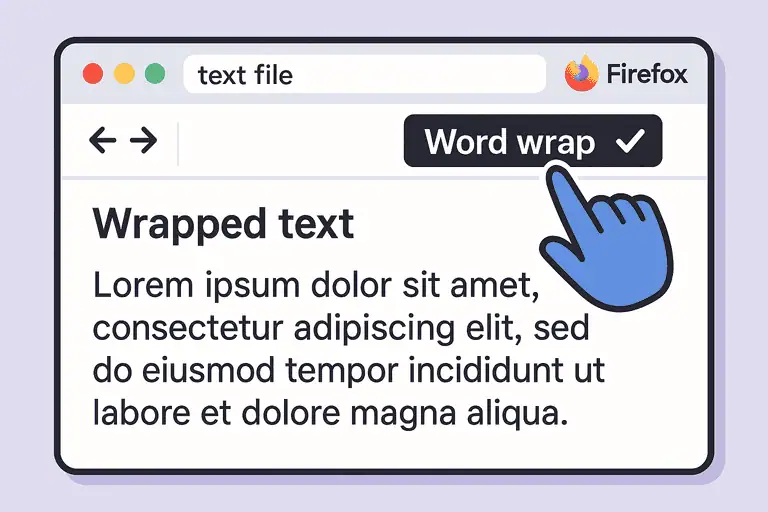
As mentioned before, many of the public ICANN meetings have transcripts available within hours after the meetings as text files. However, a disadvantage with viewing the ICANN New Delhi 2008 meeting transcripts with Mozilla Firefox such as the transcript for “Workshop: Update on Internet Governance” held on February 11th, 2008 is that the length of the lines of text are too long for the browser window requiring you to scroll left and right to read the transcript which gets confusing with the likely result that you stop reading the transcript online or try to insert the text in a word processor or text editor to word wrap the text.
If only there was a way to word-wrap the text in the browser window…………..
In this chrome subfolder, edit the text file “userContent.css” with a text editor (such as Notepad). Typically, this file does not exist by default. There is a userContent-example.css in this chrome sub-folder which you can rename to userContent.css
Add the following line to userContent.css :
pre { white-space: -moz-pre-wrap !important; }
Save the file, and restart Firefox for the changes in userContent.css to take effect.
With this change, any text files you view in Mozilla Firefox will automatically be word-wrapped so that you don’t have to scroll left and right to read the text file.
Often the presentations and relevant documents that are the subject of discussion at the meetings are available for download in PDF format while listening/watching the live stream. Also, such webcast meetings has a web based chat feature which allows you to ask questions and text chat during the meeting with other attendees who are logged in as well as with other remote participants. You can ask someone via the web chat to actually ask a question to the panel discussion. Do check out the ICANN Delhi, India meeting schedule page.