Cambridge University Press is making higher education textbooks on its Cambridge Core program free to access online through May 2020 due to Covid-19. You can browse the more than 700 books available at https://www.cambridge.org/core/what-we-publish/textbooks
English Language Teaching, in partnership with colleagues at Cambridge Assessment English, are producing free, online content for teachers and learners. Our World of Better Learning blog is supporting distance learning for those whose schools have been closed. Daily blogs with text, audio and video content focus on different aspects of online teaching and we are making our content accessible to the maximum number of people possible.
There is also a Bighter Thinking Blog at https://www.cambridge.org/gs/education/blog offering tips and advice from teachers who have been affected and guidance for those facing or experiencing school closures. So this also could be a useful resource for educators and parents looking to educate their kids at home during this period.
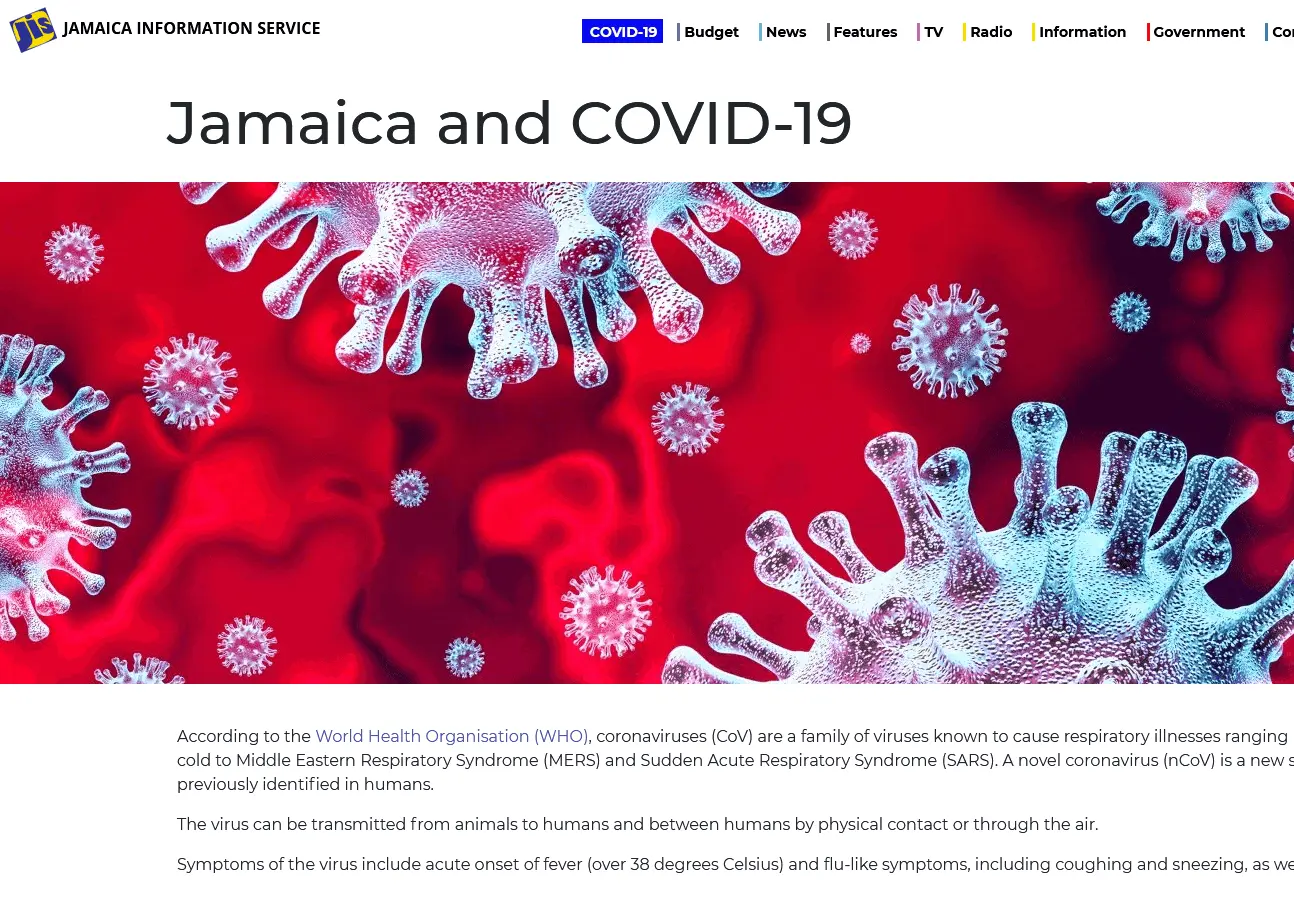
In a tweet on March 14 2020, Prime Minister of Jamaica Andrew Holness announced that all Jamaican government websites were zero-rated (meaning that such websites can be accessed without a data plan) due to the COVID-19 situation in Jamaica.
In response to TATT’s question #5 : “Should ISPs be permitted to employ marketing strategies (such as zero-rated pricing) through partnerships with content providers?”
“No. This is a violation of net neutrality principles and provides advantages to large, well funded corporations (at the expense of smaller, innovative startups). For example, by Digicel zero rating Loop TT (http://www.looptt.com/), Digicel gives Loop TT an advantage over other local news media (newspapers, radios) as Digicel users do not pay to access Loop TT but are charged to access other news media sites.
Zero rating negatively impacts on the likelihood that future innovations can survive to grow into useful services. Imagine if Altavista has approached ISPs in the mid 1990s to zero rate their search platform ; Google would have unlikely to been able to get acceptance. Or if Myspace has approached ISPs in the mid-2000s to zero rate their Myspace social network, Facebook might not have been able to survive. Zero rating of commercial traffic should be prohibited.
However, perhaps we can have a discussion on zero rating on nonpolitical public services – such as government websites (Ministry of Health, Ministry of Education for example).
Perhaps we need a zero rating tribunal where applications by ISPs to zero rate certain content are decided by a panel convened and managed by the regulator who use a clear rubric and transparent process to determine on a case by case basis what should be zero rated based on guidelines such as that from the Body of European Regulators for Electronic Communications (BEREC) at https://berec.europa.eu/eng/netneutrality/zero_rating/. Such applications for zero rating should allow for public disclosure and public comment.In this model, ISPs should not be allowed to zero rate traffic unilaterally until such applications are submitted and approved.”
The video mentions that you can clean Apple iPhone with 70% isopropyl alcohol wipes – you can read more on Apple’s “Cleaning your iPhone” page at https://support.apple.com/en-us/HT207123
The Internet Corporation for Assigned Names and Numbers (ICANN) will be having its 67th online meeting from Saturday March 7 to Thursday March 12 2020.
Originally ICANN67 was to be hosted in Cancun, Mexico, but due to concerns regarding COVID-19, it was turned into a virtual community forum.
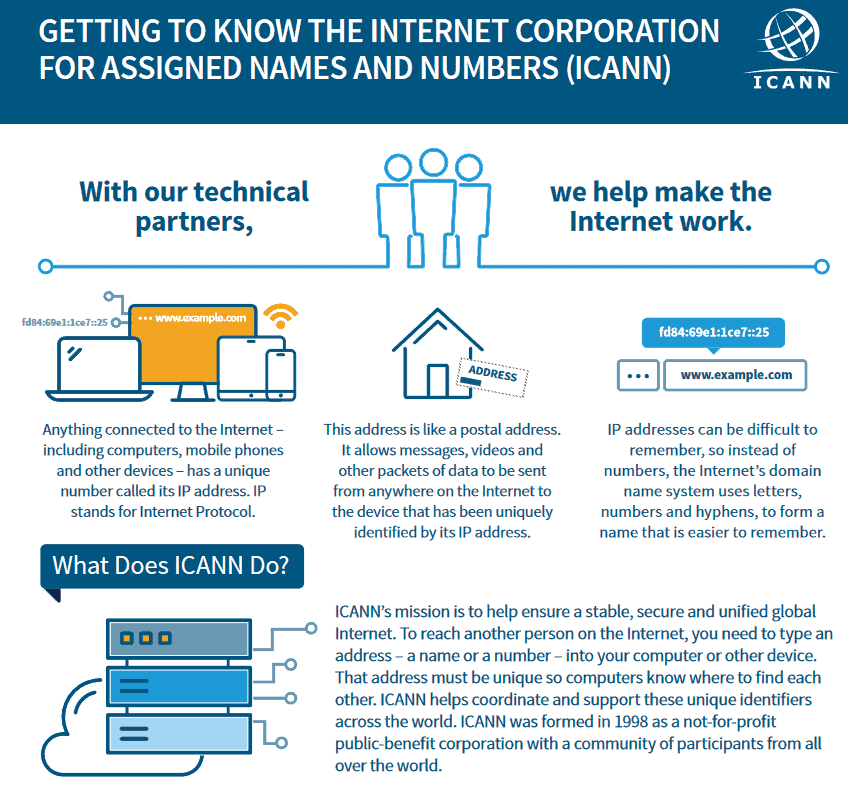
So…..what’s this ICANN?
As the name implies, ICANN helps coordinate the assignment and
management of Internet numbering resources (such as IP addresses) and
domain names (forming a system called the Domain Name System or DNS).
The DNS maps domain names to IP addresses.
ICANN also defines and implements policies for how the “Names and Numbers” of
the Internet are assigned. ICANN coordinates policy development related
to the DNS by bringing a variety of stakeholders (ranging from
governments, technical, business, civil society) organised in various
groups to develop and advise on such DNS policies. This volunteer-based
group of diverse stakeholders is called the ICANN multi-stakeholder
community.
The Trinidad and Tobago Computer Society (TTCS) is an member of the ICANN At-Large Community since 2006, which represents the interests of Internet end users in ICANN policies and activities. Currently, as the TTCS’ At-Large representative (Dev Anand Teelucksingh), I have continued to be involved in various At-Large activities. I do want to encourage anyone with a interest and a desire to learn more about ICANN policy issues and how to get involved, email me at admin@ttcs.tt and I’ll try my best to help.
Important links to learn and follow #ICANN67
ICANN67 Full Meeting Schedule – this table (you will have to scroll down a lot) shows the various online meetings happening at the same time. All times listed are local to Cancun. Mexico (GMT -5) so when looking at the ICANN67 schedule, you will need to add 1 hour to get the time of the meeting in Trinidad and Tobago.
If you visit the schedule on your iOS or Android device, you can install the ICANN Meeting App to follow the ICANN meeting schedule on your mobile / tablet device and to personalize the schedule of sessions you are interested in. Search for “ICANN Meeting” in your app stores.
There will be a Trinidad and Tobago Computer Society online conference call on Sunday March 8 2020 at 9pm to review the comments on the Interception of Communications (Amendment) Bill 2020 and immediate next steps.
The Interception of Communications (Amendment) Bill 2020 was passed in the Senate on March 3 2020 with amendments and introduced in the House of Representatives on March 6 2020.
allow for the interception and recording of communications from prisons and vehicles used to transport prisoners;
authorise officers to apply for a warrant to obtain stored communication and stored data from a telecommunications service provider;
permit officers to disclose the stored communication and the stored data;
establish the procedure for the disclosure of sensitive information; and
allow for intercepted information to be admissible as evidence in any proceedings.
From the Bill Essentials of the Interception of Communications (Amendment) Bill, 2020
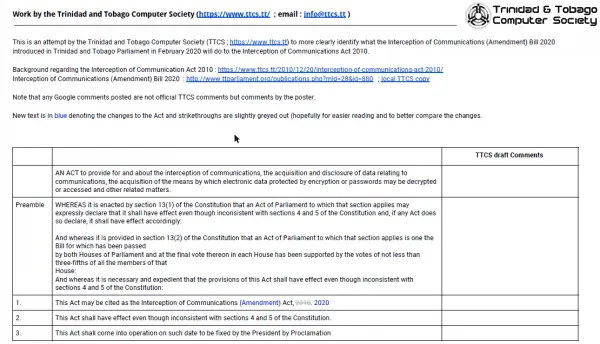
Because The Interception of Communications (Amendment) Bill, 2020 is modifying the Interception of Communications Act 2010, the Bill reads about changing/removing words in this particular section of the Act, it is very hard to understand what the final Interception of Communication Act will become if the Bill is passed.
The Trinidad and Tobago Computer Society has therefore attempted to more clearly identify what the Interception of Communications (Amendment) Bill 2020 introduced in Trinidad and Tobago Parliament in February 2020 will do to the Interception of Communications Act 2010 by creating a Google doc showing the proposed specific changes to the 2010 Interception of Communications Act and what the proposed final Act will look like. The Google doc has comments enabled so that a decision can be taken whether we should attempt to submit a formal comment.
The TTCS OSSWIN v2.71, a collection of the latest version of Free and Open Source Software for Microsoft Windows 10/8/7 is available for download. The latest release features many software updates including the latest LibreOffice 6.4 released earlier this week.
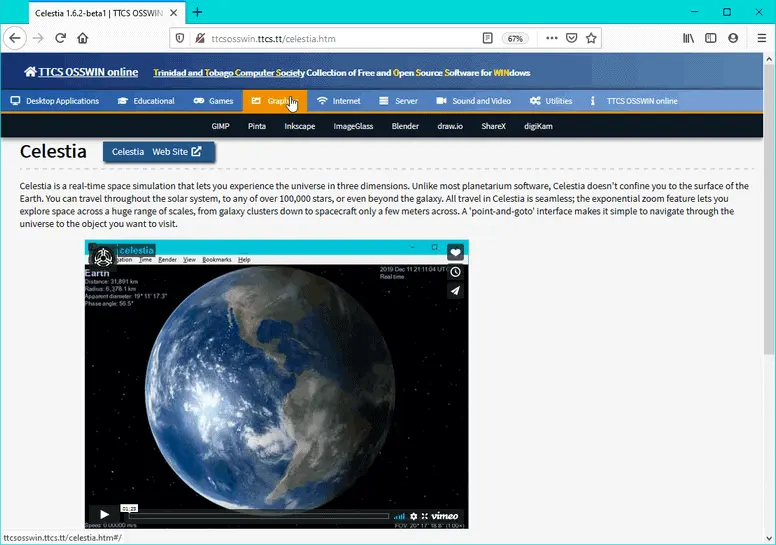
You can browse TTCS OSSWIN online at http://ttcsosswin.ttcs.tt/ which features the web interface to learn about Free and Open Source programs in various categories, including screenshots or videos of the programs and a link to the program’s website where you can download the program. The web based UI is responsive, meaning it should be usable on non-Windows small screen mobile phones and tablets.
Download TTCS OSSWIN
You can download the entire collection of TTCS OSSWIN as a 7GB file for extracting to your harddrive or USB storage device (or burn on a DVD). The TTCS OSSWIN collection provides a link to install the software directly and in the case of a program providing 32 bit and 64 bit versions installers, TTCS OSSWIN attempts to autodetect whether you are running 64 bit Windows and presents that installer first. The web interface and all screenshots and videos are included in the collection so that you can browse and install software on a Windows computer without internet access.
Developing a a card like UI (similiar to the current theme of the TTCS website) for the selection of programs in the various categories using best practices in HTML5 and CSS.
Updating the text descriptions of programs. The goal is to strive to describe in the simplest of terms possible what the programs does and to answer “why should I try the program”
Replacing static photos with videos of the programs in action.
Find Free and Open Source Software for Windows that is useful and easy to use. The curated list of software in TTCS OSSWIN is an attempt to list what is considered the “best” in ease of use and functionality and not to include dozens of programs that do the same thing.
If you’re interested in assisting with this work or want to give comments and feedback, then send a email to osswin@ttcs.tt .
At a ceremony launching the availability of LED lighting and free Wifi at Woodford Square, Port of Spain, Minister of Public Utilities Robert Le Hunte indicated that with the help of TSTT and T&TEC, more “smart spaces” with free, public WiFi and LED lighting will be done in other places such as San Fernando, Chaguanas, Point Fortin and Arima with San Fernando promised before the end of February 2020. Watch the report from TTT Live
The Trinidad and Tobago Computer Society will be having a meeting on Wednesday January 22nd, 2020 from 7pm to 9:30 pm at MammaMia, Grand Bazaar (click for map).
Our key topics for this meeting are the end of extended support for Windows 7, Security on Windows 10, an update on the TTIGF 2020 coming up this month, the Cybercrime Bill and our upcoming AGM. Please come prepared with your comments and contributions to the discussion.
Anyone interested in computing and ICT are welcome to attend, however please RSVP to info@ttcs.tt. See you there!
Youth-led Collaborative Exchange: The Future of the Internet
TTIGF 2020 will also have an open forum session where all participants (including online) can share comments, questions, solutions and best practices on internet governance locally, regionally and globally.





![Trinidad and Tobago Computer Society Meeting [Win7 EoL, Win10 Security, TTIGF 2020, Cybercrime Bill, TTCS AGM] on Wednesday January 22nd 2020 from 7 to 9:30 pm; MammaMia Pizzeria & Cucina Italiana, Grand Bazaar](https://www.ttcs.tt/wp-content/uploads/2025/08/f2f-tech-meeting-restaurant.webp)