The 17th annual Caribbean Internet Governance Forum (CIGF2021) organised by the Caribbean Telecommunications Union (CTU) will be held online from the 24 to 25 August 2021 via Zoom.
The theme of CIGF2021 is “Caribbean Internet Governance Priorities for Post-COVID ICT-Driven Development.”
The Caribbean Internet Governance Forum (CIGF) is a regional, multi-stakeholder forum initiated by the Caribbean Telecommunications Union (CTU) and the Caribbean Community (CARICOM) Secretariat in 2005 to coordinate a regional approach to Internet Governance (IG), initially focusing on the proceedings of the United Nations’ World Summit on the Information Society (WSIS). The forum has since met annually and has delivered significant and pioneering benefits to the region as well as to the global Internet community. Highlights of its work include formulation of a Caribbean Internet Governance Policy Framework; the proliferation of Internet exchange points (IXPs); capacity building in IG Principles and best practices;and growth in Caribbean influence in international IG fora.
In 2019, representatives from United Nations Educational, Scientific and Cultural Organization (UNESCO)’s member states decided to develop a global framework to guide the ethical development and application of Artificial Intelligence (AI).
Why is ethics crucial in the development of Artificial Intelligence? As Dafna Feinholz, Chief of the Bioethics and Ethics of Science Section of UNESCO notes in a 90 second video:
“Imagine a self-driving car with broken brakes going at full speed toward a grand-mother and a child. If it deviates a little bit, one of them can be saved. Who would you choose, the grandmother or the child?
Do you think there is only one right answer? This is an example of a typical ethical dilemma, to show how important ethics is when we develop technologies.”
Dafna Feinholz, Chief of the Bioethics and Ethics of Science Section of UNESCO, talks about the importance of ethics when it comes to AI
“(a) to provide a universal framework of values, principles and actions to guide States in the formulation of their legislation, policies or other instruments regarding AI, consistent with international law;
(b) to guide the actions of individuals, groups, communities, institutions and private sector companies to ensure the embedding of ethics in all stages of the AI system life cycle;
(c) to protect, promote and respect human rights and fundamental freedoms, human dignity and equality, including gender equality; to safeguard the interests of present and future generations; to preserve the environment, biodiversity and ecosystems; and to respect cultural diversity in all stages of the AI system life cycle;
(d) to foster multi-stakeholder, multidisciplinary and pluralistic dialogue and consensus building about ethical issues relating to AI systems; and
(e) to promote equitable access to developments and knowledge in the field of AI and the sharing of benefits, with particular attention to the needs and contributions of LMICs [low- and middle-income countries], including LDCs [Least Developed Countries], LLDCs [Landlocked Developing Countries] and SIDS [Small Island Developing States].“
The Trinidad and Tobago Computer Society (TTCS) has been asked to give feedback to the Government of Trinidad and Tobago (GoRTT) on whether GoRTT should vote to adopt the UNESCO draft text of the recommendation on the ethics of Artificial Intelligence.
The Trinidad and Tobago Computer Society will be having a online call on Tuesday August 10 2021 at 8pm to discuss the draft Data Protection (Amendment) Act.
The Draft Data Protection (Amendment) Bill seeks to amend the Trinidad and Tobago’s Data Protection Act partially proclaimed in 2011 to “…enhance the existing legislative framework for protecting an individual’s right to privacy of personal information, including the right of an individual to access their personal information, while recognising that other rights and interests may at times also need to be taken into account; to give effect to internationally recognised privacy obligations and standards in relation to the privacy of personal information; and to provide for related matters.”
The Trinidad and Tobago Computer Society has been invited to stakeholder consultations to provide feedback towards the finalization of the Draft Data Protection Amendment Bill.
Anyone interested in this issue is welcome to attend this call, which will be using Zoom.
Please RSVP for the passcode at info@ttcs.tt ! Also, join our mailing list at https://ttcs.tt/jointtcs
Be sure to update to the latest Zoom desktop client at https://zoom.us/download#client_4meeting and/or if connecting from mobile, have the Zoom mobile app for iOS or the Zoom mobile app for Android devices. See you on the call!
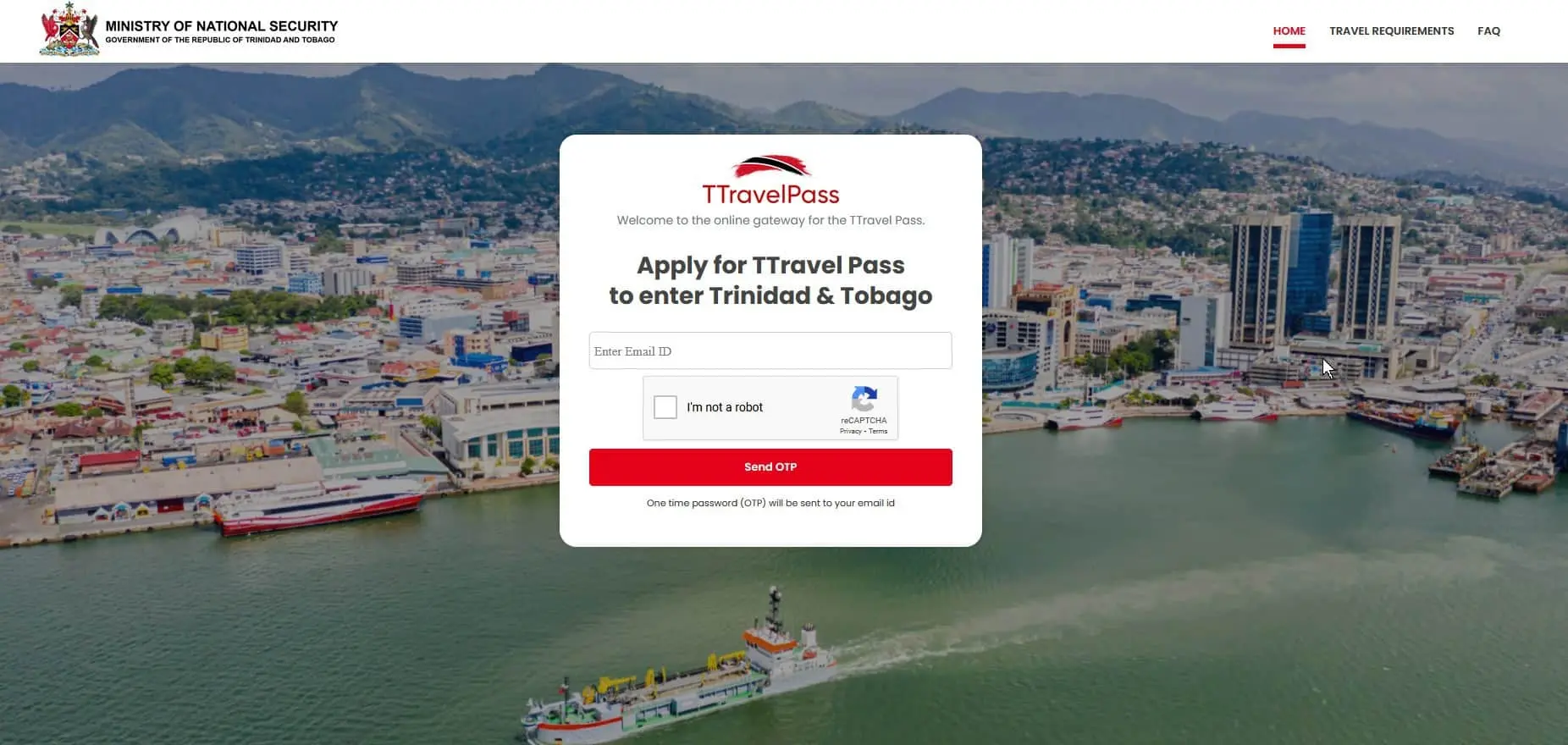
With the reopening of Trinidad and Tobago’s borders in mid July 2021, the Ministry of National Security of Trinidad and Tobago has launched “TTravel Pass” at https://ttravelpass.gov.tt/ (Note the spelling!).
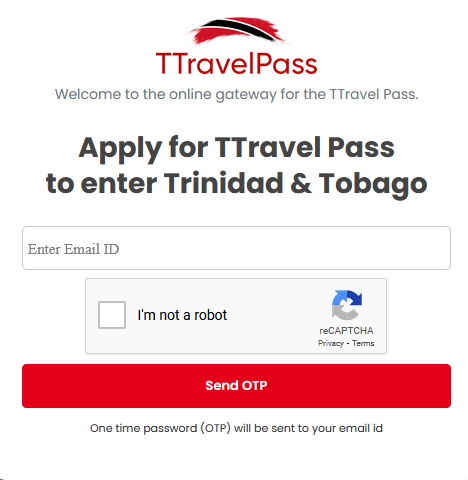
TTravel Pass’s registration page
Persons wanting to travel to Trinidad and Tobago can file an application (and upload various documents) to get a TTravel Pass to travel to Trinidad and Tobago. See https://ttravelpass.gov.tt/travel-requirement on the full details of the application process and the required documents.
Some observations :
Given the unusual spelling (TTravel Pass) as opposed to “TT Travel Pass”, perhaps the domain tttravelpass.gov.tt should be created to redirect to ttravelpass.gov.tt (Update July 15 2021 : this was implemented!)
However, why not use a simpler domain like https://travelpass.gov.tt ? It would be easier to remember and say. The name TTravel Pass could still be used throughout the site. (Update July 15 2021 : https://travelpass.gov.tt redirects to https://ttravelpass.gov.tt )
What’s the data retention policy for travelers’ documents uploaded to TTravel Pass ?
The footer on the TTravel Pass website says “Developed and Licensed by: Amber Innovations (An Amber Group Company)“. The Amber Group company was also the developer of the Jamaican Government’s JamCOVID site . Earlier this year, Techcrunch reported that the JamCOVID site exposed immigration records and COVID-19 test results of travelers to Jamaica. After the initial lapse was fixed, two more security lapses of the JamCOVID website were also reported by Techcrunch.
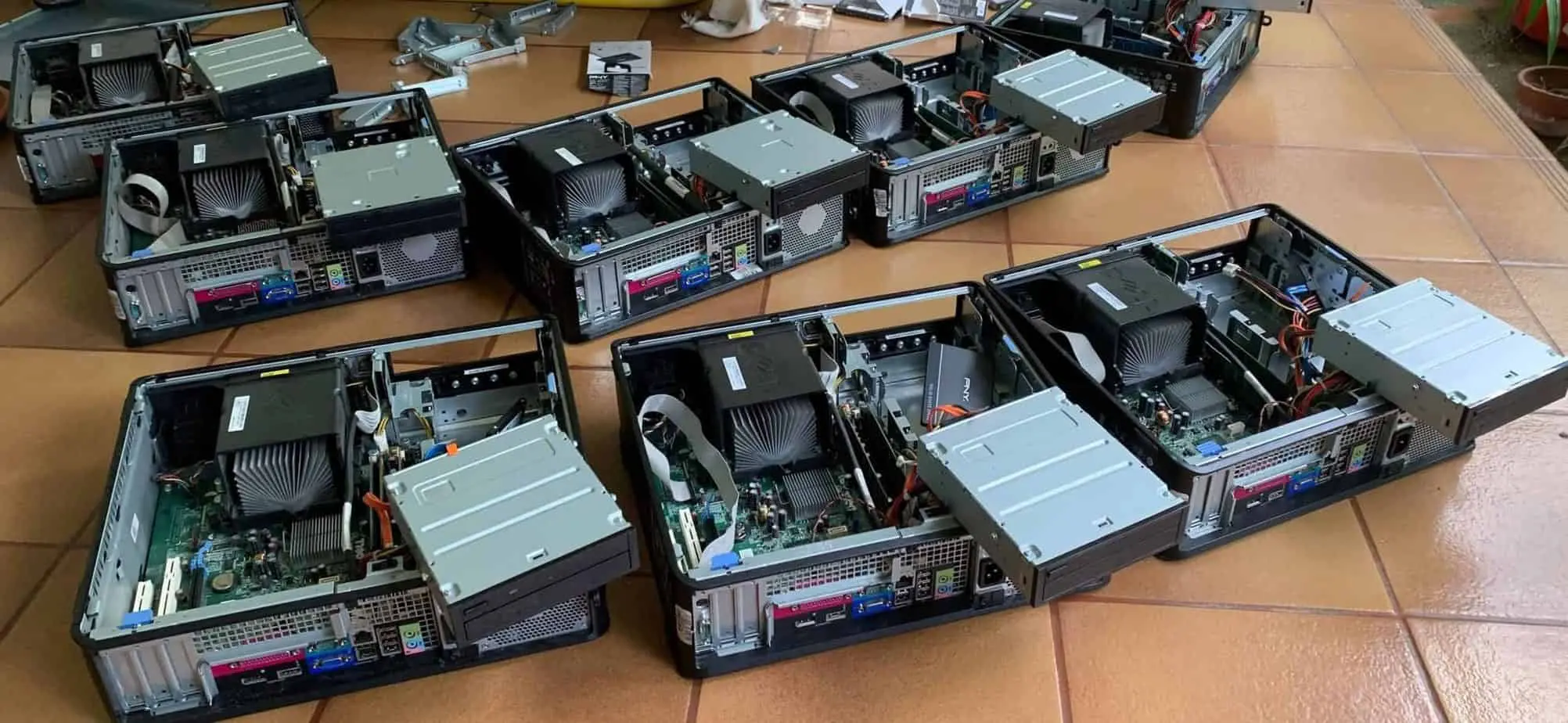
The Trinidad and Tobago Computer Society will be having a online call on Thursday June 17 2021 at 8:30 pm to discuss next steps of our Computer Refurbishment Project .
Anyone interested in the topic (and able to help) is welcome to join the call.
The Trinidad and Tobago Cyber Security Incident Response Team (TT-CSIRT) has full access to query Trinidad and Tobago Government domains at Have I Been Pwned (HIBP ; https://haveibeenpwned.com/), a useful monitoring service to check whether your email address have been involved in any data breach (where data has been unintentionally exposed to the public). HIBP is run by Troy Hunt and as he notes on his blog post, Trinidad and Tobago is the first Caribbean government to be added to HIBP.
This means that TT-CSIRT can monitor HIBP and be alerted whenever any user with email addresses under .gov.tt have been impacted by data breaches.
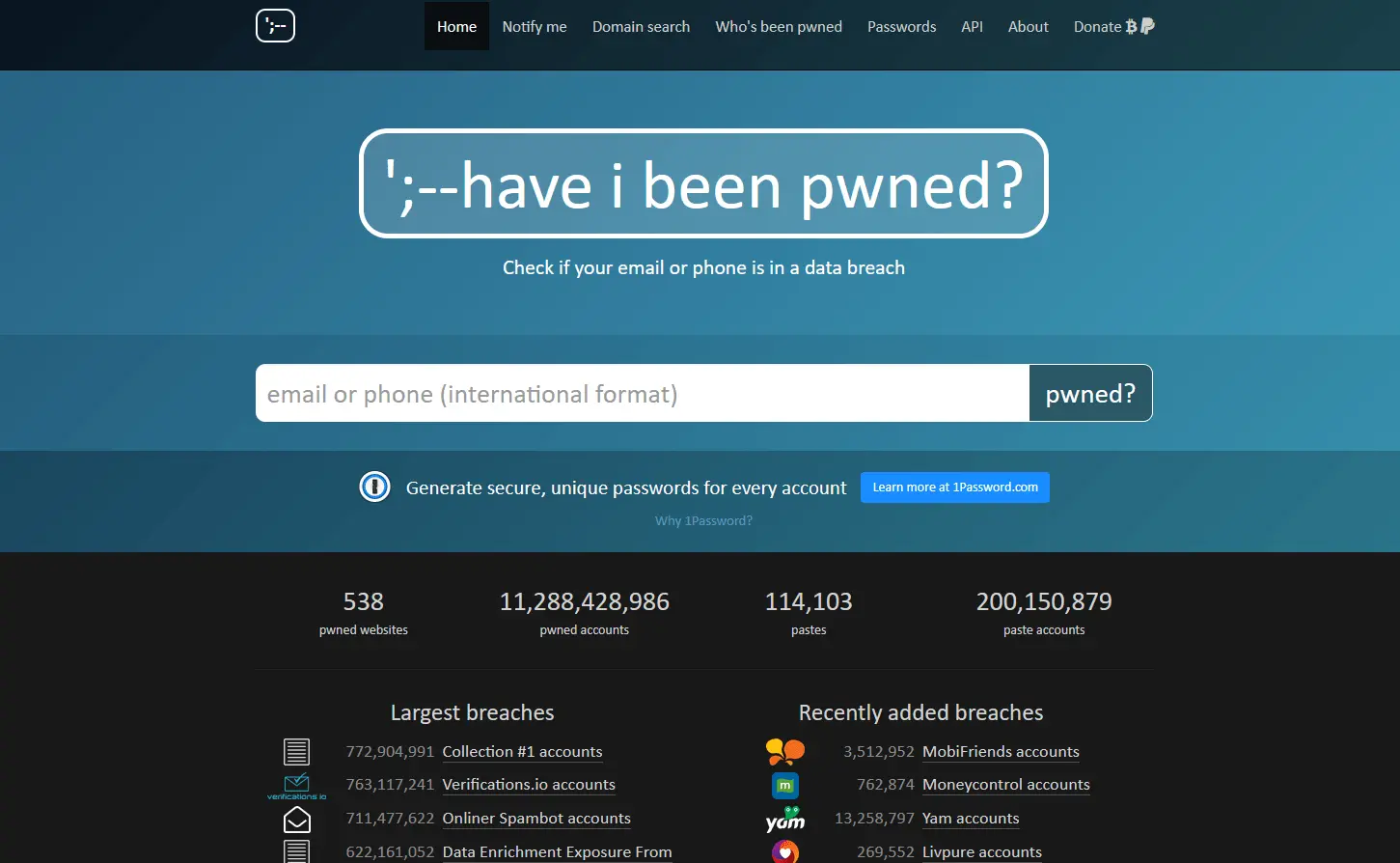
HIBP is a great service that you can use. Just go to https://haveibeenpwned.com/ and enter your email address.
Screenshot of Have I Been Pwned (HIBP) website
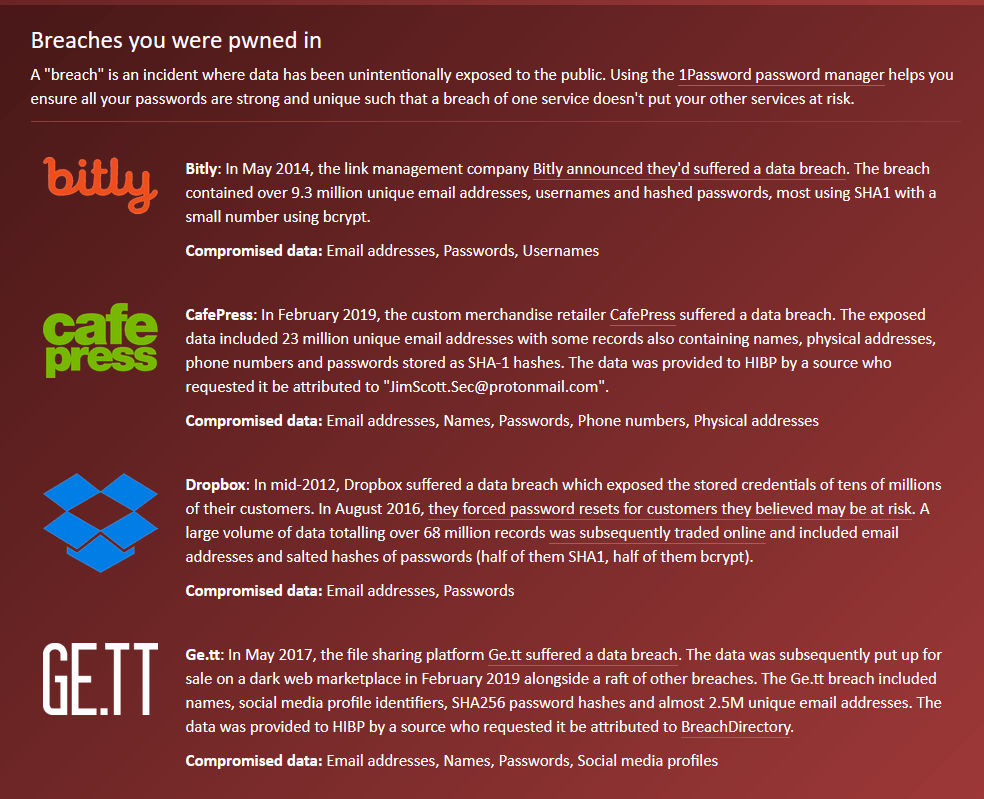
HIBP will then search its database of data breaches and shows whether your email address was found on them along with what other data was compromised. The compromised data often included personal information you shared with the service (such as date of birth, username, phone number and physical address) and your password.
An example how the HIBP website shows where your email address was used and some known details about the data breech.
You can take steps to re-secure your account at the service by changing your password to a secure, unique password that is NOT used on other services you share data with. If you have been using the same password on other services (a big NO-NO), you should change the password on those services ASAP as any attacker can use your email address and reused password to gain access to your other services.
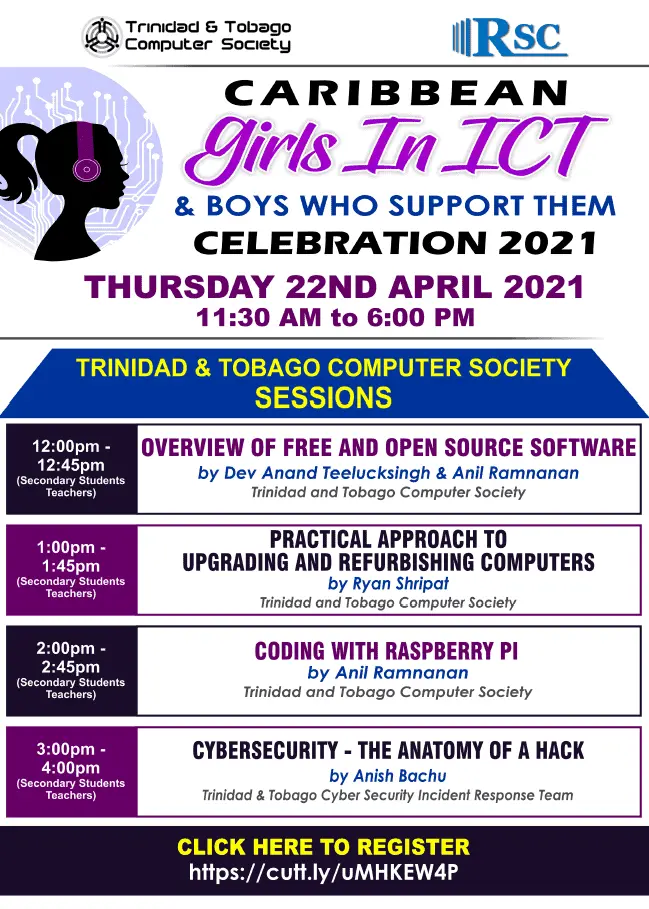
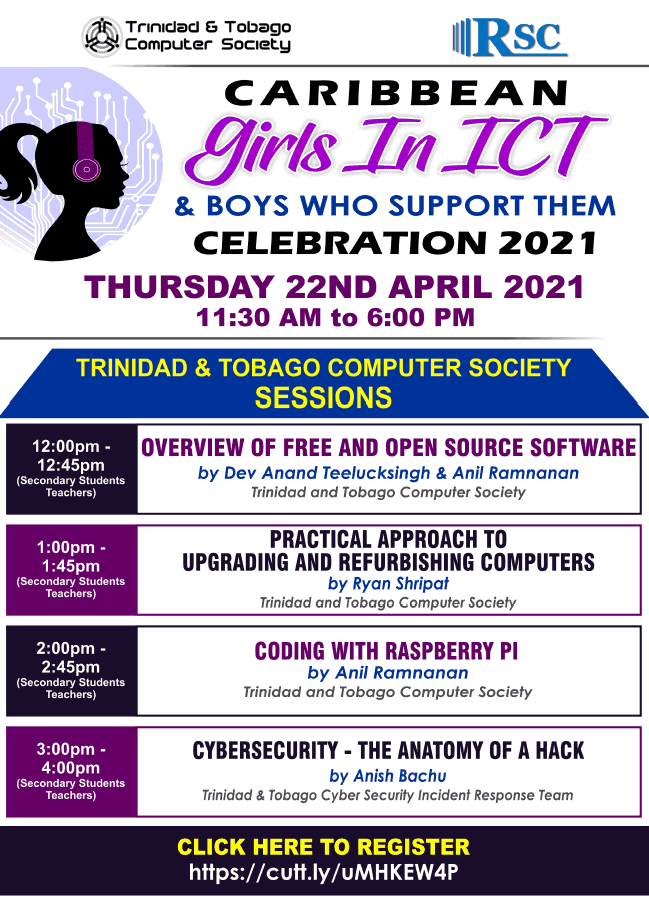
The Trinidad and Tobago Computer Society (TTCS) will be involved with Restore a Sense of I Can’s (RSC) Caribbean Girls in ICT 2021 event on Thursday April 22 2021.
In RSC’s Caribbean Girls in ICT (GICT) event, students from 15 Caribbean countries (including Trinidad and Tobago) will be participating in a variety of online sessions on various ICT topics such as coding, robotics, artificial intelligence, digital media and more! To register for RSC’s GICT 2021 event, go to https://cutt.ly/uMHKEW4P
Last year GICT event, the TTCS had a session on Free and Open Source Software.
For GICT 2021, the TTCS will be doing four sessions :
Overview of Free and Open Source Software
Coding with a Raspberry Pi
A Practical Approach to Upgrading and Refurbishing Computers
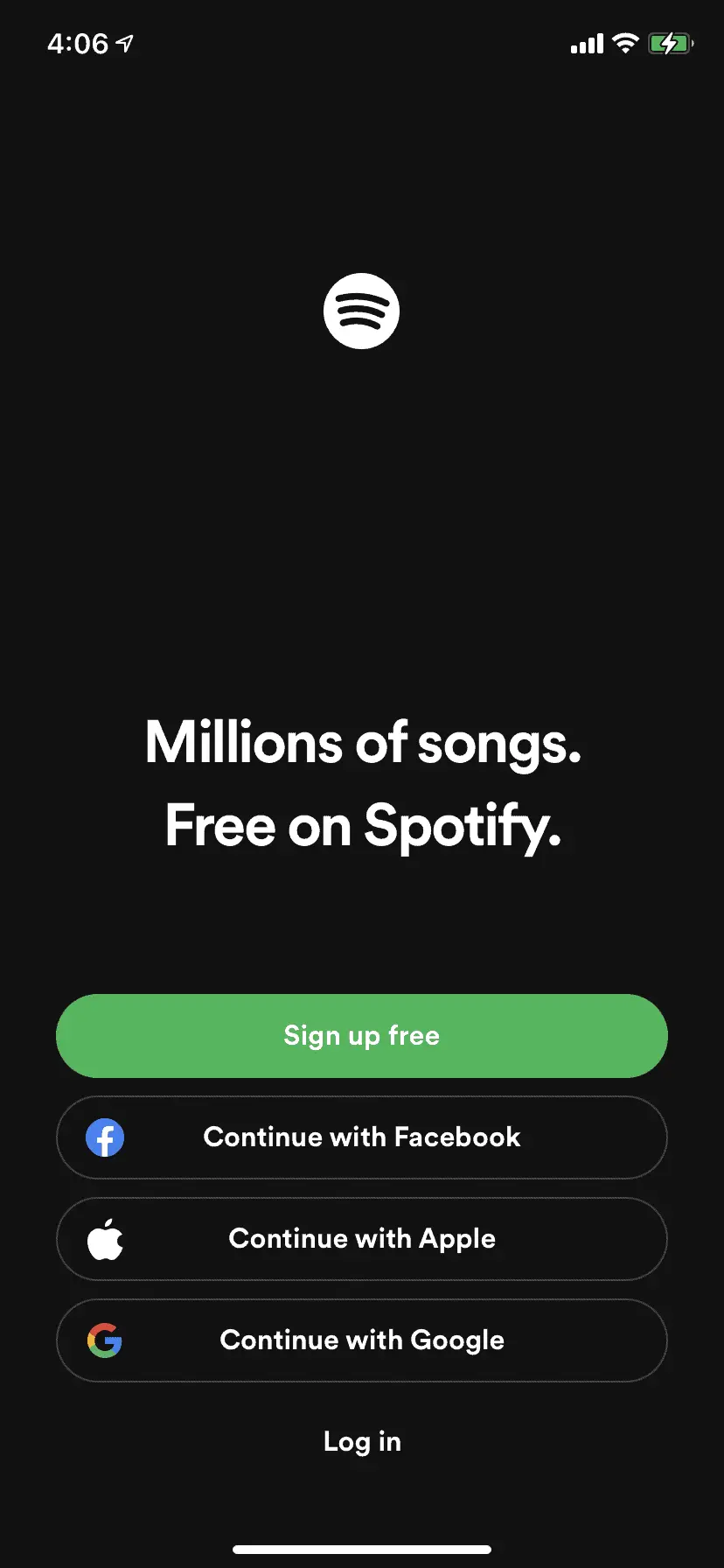
According to a 22 February 2021 Tweet from Spotify, the streaming music and podcast service, Spotify will be launching in 80+ markets in the new few days which includes Trinidad and Tobago, Jamaica, St. Lucia, Barbados, St. Vincent and The Grenadines, Antigua and Barbuda, Haiti, Belize, Grenada, Bahamas, St. Kitts and Nevis, Guyana, Dominica, Curaçao and Suriname.
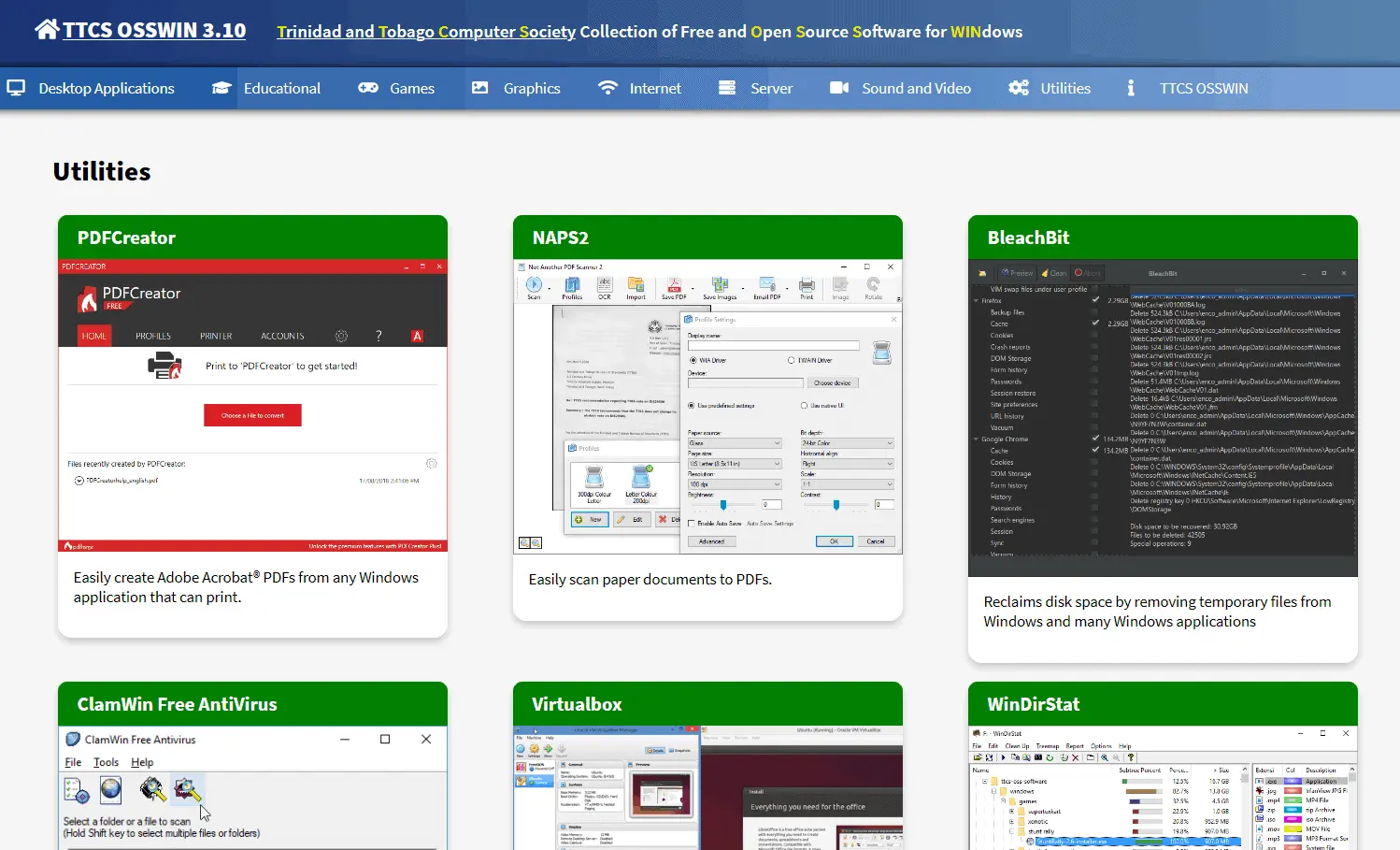
TTCS OSSWIN v3.20, a collection of Free and Open Source Software for Windows is available for download or viewing online at https://ttcsosswin.ttcs.tt/ . With over 90 programs organised in various categories from educational software, Desktop Applications, Graphics and more, Apart from many software updates, one new program was added : Lively, which allows you to add animated desktop wallpapers to your Windows desktop.
You can browse TTCS OSSWIN online at https://ttcsosswin.ttcs.tt/ which features the web interface to learn about Free and Open Source programs in various categories, including screenshots or videos of the programs and a link to the program’s website where you can download the program. The web based UI is responsive, meaning it should be usable on non-Windows small screen mobile phones and tablets.
Download TTCS OSSWIN
You can download the entire collection of TTCS OSSWIN as a 7GB file for extracting to your harddrive or USB storage device (or burn on a DVD). The TTCS OSSWIN collection provides a link to install the software directly and in the case of a program providing 32 bit and 64 bit versions installers, TTCS OSSWIN attempts to autodetect whether you are running 64 bit Windows and presents that installer first. The web interface and all screenshots and videos are included in the collection so that you can browse and install software on a Windows computer without internet access.