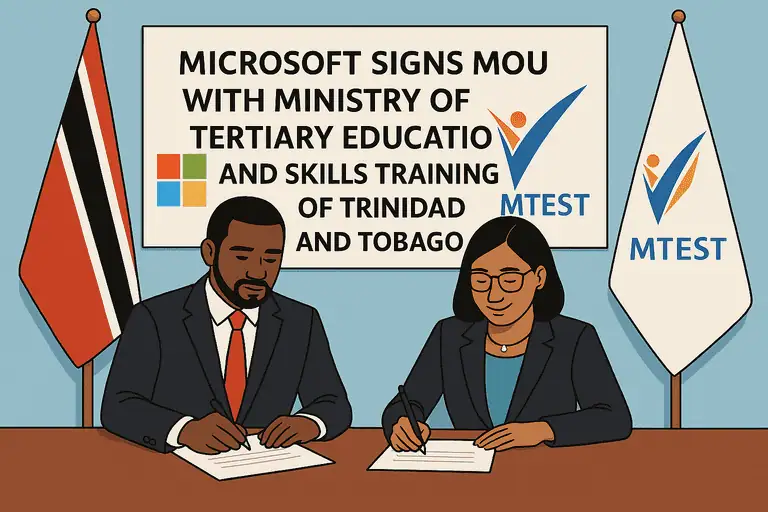
“Microsoft Trinidad and Tobago has signed a memorandum of understanding (MOU) with the Ministry of Tertiary Education and Skills Training (MTEST).
The MOU is expected to enhance MTEST’s customer service delivery through the use of information and communication technology (ICT).
Microsoft TT and MTEST signed the MOU recently at the launch of Microsoft’s CityNext which focuses on using innovation and technology for the positive development of cities. Frances Correia, Country Manager of Microsoft TT and Mariana Castro, General Manager of Latin America New Markets for Microsoft, signed on behalf of the company. Signing on behalf of MTEST was Acting Permanent Secretary Angela Sinaswee-Gervais.”
You may not realise it, but App developers also offer discounts on CyberMonday, not just online retailers. Gizmodo has a list of the best App deals for iOS and Android for today.
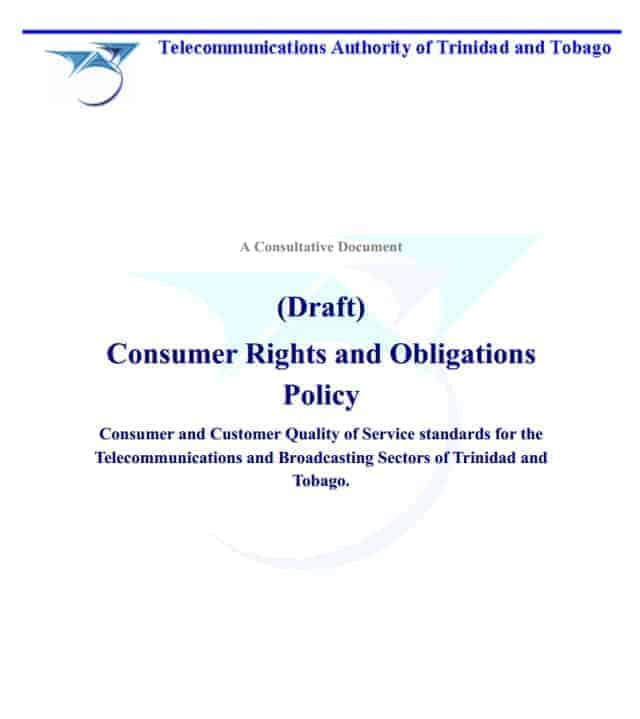
The Telecommunications Authority of Trinidad and Tobago (TATT) has published for comment a Draft Consumer Rights and Obligations Policy. This is the fourth version of the policy incorporating changes prompted by comments received by TATT.
From the document:
“This Draft Consumer Rights and Obligations Policy seeks to make recommendations that would safeguard the interests of consumers in the telecommunications and broadcasting sectors. The final policy should ensure that consumers have a right to the following:
Access to essential telecommunications and broadcast services;
Access to the information required to make informed consumption decisions;
Personal privacy which is respected and protected;
Minimum standards for consumer-related service quality;
Protection from unfair and anti-competitive business practices;
Effective and efficient complaint recognition, handling and resolution;
Information which creates an awareness of relevant consumer obligations.”
“Microsoft looks ready to kill off Windows RT, its version of Windows devised for chips based on ARMs architecture, judging by remarks by senior executive Julie Larson-Green.Larson-Green, who is executive vice-president of Devices and Studios at Microsoft, said that the aim of Windows RT was “our first go at creating that more closed, turnkey experience [that Apple has on the iPad]…” but that Microsoft now has three mobile operating systems: “We have the Windows Phone OS. We have Windows RT and we have full Windows. Were not going to have three.”
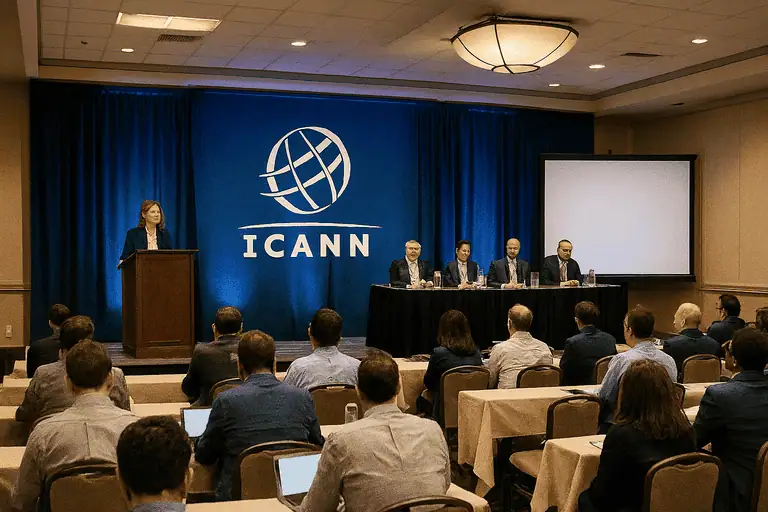
The full meeting schedule can be viewed at http://buenosaires48.icann.org/en/schedule-full. Each meeting on http://buenosaires48.icann.org/en/schedule-full has a link to aseparate meeting page (for example, the ALAC and Regional Leadership Working Session 1 meeting at http://buenosaires48.icann.org/en/schedule/sun-alac-regional) has remote participation details and the agenda that allows anyone with a broadband connection to attend the live sessions and participate.
Note that the times of meetings are listed in the local time in Buenos Aires, Argentina which is UTC/GMT -3 hours. This means that the time in Buenos Aires is 1 hour ahead of the time in Trinidad and Tobago. This means that a time of 4pm local time in Buenos Aires is 3pm in Trinidad and Tobago
The Trinidad and Tobago Computer Society (TTCS) is involved in ICANN At-Large. At-Large is the name for the community of individual Internet users who participate in the policy development work of ICANN. Currently, the vice chair of TTCS, Dev Anand Teelucksingh serves on the At-Large Advisory Committee (ALAC) which provides advice on ICANN activities as it relates to the interests of the individual internet end users. The agendas of all the At-Large meetings can be found at https://community.icann.org/x/nFl-Ag
There are several meetings during the ICANN 48 Buenos Aires meeting with a significant focus on Latin American and the Caribbean.
Adobe Flash Player v11.9.900.117 and earlier versions for Windows and Macintosh,
Adobe Flash Player v11.2.202.310 and earlier versions for Linux
to ” address vulnerabilities that could cause a crash and potentially allow an attacker to take control of the affected system.”
You can read the Adobe Security Bulletin at http://www.adobe.com/support/security/bulletins/apsb13-26.html but the vulnerabilities in versions of Adobe Flash before November 12 2013 could allow for execution of unwanted code (typically malware), without your consent just by visiting a website with malicious Flash applications or video (SWF). Therefore, you should update your Adobe Flash Player to the latest version to close this loophole.
To determine what version of the Adobe Flash player you have on your Windows, Macintosh or Linux system, visit http://www.adobe.com/software/flash/about/
To download the latest version of Adobe Flash Player, visit http://www.adobe.com/products/flashplayer/distribution3.html
Windows users should note that the Flash Player in v9 and earlier versions of Microsoft Internet Explorer v9 and the one in web browsers like Opera, Mozilla Firefox and Safari are separate installs. You should install and update both versions of Adobe Flash.
Internet Explorer v10 and Internet Explorer v11 (for users for Windows 7 Service Pack 1 and Windows 8) browsers have Adobe Flash Player built-in and users should update their Internet Explorer browser versions.
Google Chrome browser users has Adobe Flash Player built-in and users should update the Google Chrome browser to the latest version. See http://www.google.com/support/chrome/bin/answer.py?answer=95414 on how to do so.
“A new research prototype from Microsoft Research Asia, the Chinese Academy of Sciences, and Beijing Union University uses Kinect technology to translate sign language into spoken language—and spoken language into sign language—in real time. It translates from one sign language to another (such as between American sign language and Chinese sign language), and helps people who can hear communicate with people who are deaf or hard of hearing.
The sign language translator uses computational and sensor technology—specifically Kinect’s ability to capture visual and articulation data simultaneously. Machine learning and pattern recognition enable the tool to interpret the meaning of the different gestures captured by the Kinect device. By reducing communication barriers and facilitating social interactions, this tool has the potential to help improve the quality of life for people who are deaf or hard of hearing.”